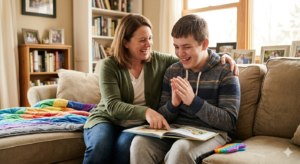

A common misconception about autism is that autistic people don’t care about social connection, when in reality many deeply want friendships, closeness, and meaningful relationships.What’s often misunderstood is that autistic individuals may express interest, affection, or connection differently, or they may find typical social rules confusing, exhausting, or unpredictable. Challenges with communication or reading social cues can make it seem like they’re uninterested, but that’s rarely the case. Many autistic people describe wanting friends and partners just as much as anyone else—they simply benefit from clearer communication, patience, and environments where their natural ways of connecting are understood and respected. The Netflix show “Love on the Spectrum” depicts some of these desires and struggles, and its popularity show an increased understanding that people with autism or other developmental disabilities want and deserve these types of relationships.
As children become tweens and teens, social connections often begin to include dating or romantic relationships. Whether it’s a crush, a passing flirtation, or a lasting romantic relationship, it is important to remember that autistic people experience these thoughts, emotions, and physical urges, just like anyone else. This may cause parents embarrassment or worry, but this is not onlytypical but also healthy. Supporting your child through this stage of life can help them build confidence, independence, and stronger social understanding. Romantic or sexual feelings aren’tlimited to a certain cognitive level or communication skill; it’s a human experience, and autistic individuals deserve the same opportunities to explore it safely and respectfully.
Because social communication can be challenging for many autistic people, they often benefit from explicit teaching about dating norms, boundaries, and expectations. Neurotypical peers often learn these skills indirectly by observing others, but autistic individuals may need more direct guidance. This can include understanding consent, recognizing signs of interest or discomfort, learning how to start and maintain conversations, and navigating the give‑and‑take of relationships. These skills aren’t about forcing someone to act “less autistic”—they’re about giving them tools to express themselves, protect themselves, and build relationships that feel good to them. The Organization for Autism Research provides a great resource for autistic people to learn about these complex topics in a straightforward, honest, and understandable way.
While it’s important to recognize autistic people’s autonomy and right to explore social connections, it’s essential to take steps to ensure their safety. Unfortunately, autistic people are more likely to be victims of bullying, exploitation, and sexual assault than their neurotypical peers. Focused teaching and support are needed to help autistic people understand personal boundaries—both their own and those of others. Many autistic people appreciate clear rules and structure, so teaching concepts like personal space, appropriate touch, and privacy can be especially effective when explained concretely. Role‑playing, visual supports, and social stories can help make abstract ideas more accessible. Parents can also model healthy boundaries in everyday interactions, reinforcing that everyone has the right to say “no,” to ask for space, and to expect respect in return. Autistic self-advocate Kaelynn Partlow provides a great quick description of relationship circles.
Autistic individuals who have higher support needs or intellectual disabilities also have the right to sexuality education and social‑skills training. Sometimes families worry that discussing these topics will encourage behavior and that they should “leave well enough alone”, but research consistently shows the opposite: education increases safety. People who are not taught about their bodies, boundaries, and relationships are more vulnerable to exploitation and less able to advocate for themselves. Teaching these skills in a developmentally appropriate way—using clear language, repetition, and concrete examples—helps ensure that all autistic individuals can navigate relationships with dignity and autonomy. The Organization for Autism Research also provides a great webinar across the entire autism spectrum.
Talking to your child about sexuality is difficult for most parents. When your child has additional learning challenges or differences in how they process information and interact socially, this topic can be even more daunting. However, whether your child communicates verbally or nonverbally, needs minimal or extensive support, they deserve access to information, guidance, and opportunities to form meaningful safe relationships. By educating yourself with the resources shared here, as well as these webinars on puberty and relationships, you may feel more prepared to address this stage in your child’s life. Ultimately, your willingess to approach the topics of sexuality and relationships will set the stage for your child to have fulfilling relationships throughout their life.
Remember that while the suggestions and resources listed here can be helpful, they are not individual-specific. Always connect with your child’s healthcare, educational, and behavioral providers when implementing any teaching strategies. And please contact us for support!