
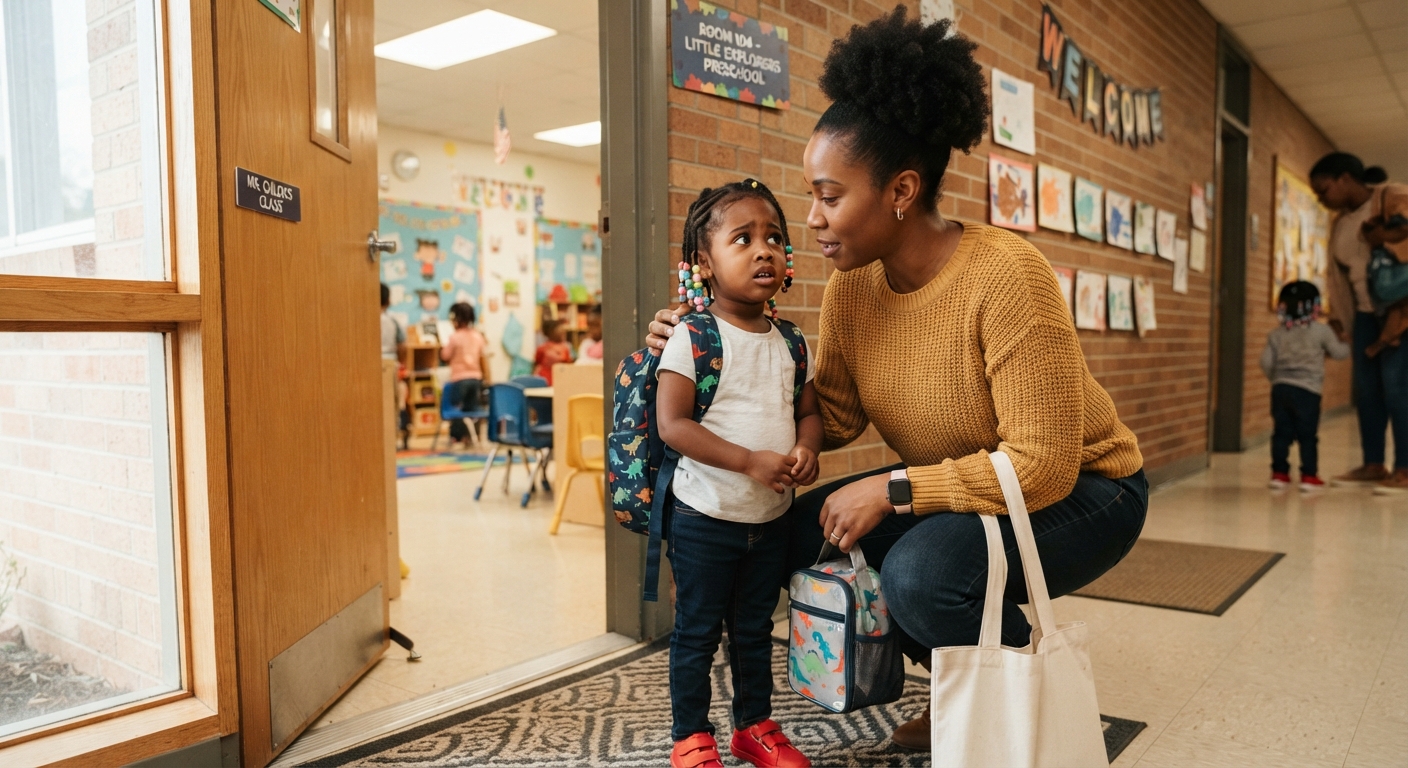
The first day of school is a childhood rite of passage. Every August and September, our social media feeds are full of bright, smiling kids on their front porches on their way out into a whole new world of teachers, textbooks, and recess games.
But for some parents of young kids with autism, those photos may be an upsetting reminder that they can’t imagine school being a place where their child learns and thrives. Maybe they’ve toured their local preschool or kindergarten and thought, “This is great, but I just can’t see my child handling all of this!” Or perhaps they’ve already tried regular education settings and sadly realized their child just got lost in the shuffle and was too overwhelmed to learn.
Deciding between your local preschool or kindergarten and an ABA therapy center is tough, and there isn’t a single “right” answer that applies in every situation. Ultimately, weighing the benefits and limitations of these two very different environments, along with your understanding of your child’s unique strengths and needs, will help guide this decision.
A traditional preschool or kindergarten classroom offers many valuable things, such as same-age peers, a general education curriculum, and countless natural opportunities for social learning. Children pick up on things simply by being immersed among their peers: how to line up, how to wait their turn, and how to read the room during circle time. For some children with autism, especially those with milder social and communication challenges, this setting is exactly the kind of practice they need. If your child is already communicating fairly well, tolerates group settings, and just needs some extra support with specific skills, a preschool classroom paired with supplemental in-home or community-based ABA therapy might be the best fit to give them both the peer exposure and the targeted learning support they need.
A center-based ABA therapy program, on the other hand, offers something a general classroom can’t: a highly individualized, data-driven approach where a child’s specific goals, such as communication and language, daily living and self-help skills, and emotional regulation, are targeted directly, with a much higher ratio of adult support and instruction built in throughout the day. For children who don’t learn in more naturalistic ways or from observing peers, this setting may be a much more valuable learning experience at this young age.
So how do you actually decide? Start by thinking honestly about where your child is right now, not where you hope they’ll be in six months.
Does my child show developmentally appropriate school readiness skills?
School readiness isn’t really about knowing their shapes, colors, and letters. Instead, consider the following:
- Can your child follow group instructions with minimal support?
- Do they use a form of communication that is generally understandable to others?
- Are they at least partially toilet trained?
- Are they interested in at least playing alongside their peers?
How does my child learn best?
Do you think your child is ready to learn, even with additional support, through natural group routines? Or does your child need a more structured, individualized, and focused approach to gain skills? It’s important to consider not just if your child is able to tolerate and follow along with group learning and routines, but do you think they will actually benefit and grow from it?
What do I think is most important for my child to be learning right now?
What do you value and prioritize for your child’s education? Maybe having your child around same-age peers is more important to you than learning various communication and language skills at this age. Or perhaps you feel that learning to control their emotions and manage their sensory sensitivities is essential, and social skills can come later. Do you think exposure to a typical education setting is needed even if it may not result in much engagement for your child right now?
It’s completely understandable that parents want to see their child enter into and succeed in a public education setting. It’s a huge part of childhood for many of us. And for many children with autism, school can be a supportive social and academic place where they learn, connect, and thrive. Some autistic children may need little to no support to succeed at school. Depending on their needs, education settings with or without a 504 or IEP can be a perfectly appropriate way to receive early education.
But some young children with autism simply aren’t ready or able to benefit from a traditional education setting. If your child has significant developmental delays associated with autism, such as limited communication, difficulty with transitions, or behaviors that make it hard to safely participate in a group setting, a center-based ABA program can offer the intensive, early intervention for autism that helps build a stronger foundation before stepping into a less structured classroom.
And that’s an important piece to remember… you’re looking to build a stronger foundation before going to school. If you decide to delay starting in a typical educational setting, you haven’t given up on school. This is not a permanent fork in the road. For many children, additional time with early intensive behavioral therapy lays the groundwork and teaches the essential skills that will increase their chances of success in school in the future.
Finally, it’s important to consider the logistics that keep your family’s day-to-day life running. If your child goes to the local preschool, how will they get to and from school? How long is the school day? Will they need aftercare, or will someone be home with them in the afternoon? Likewise, if you choose ABA therapy, how many weekly hours will your insurance authorize? Can someone drop them off and pick them up at the clinic? Also, a hybrid option may be a reasonable choice for your family and child. Perhaps they could go to an ABA clinic on Mondays, Wednesdays, and Fridays, and attend their local preschool on Tuesdays and Thursdays. Connecting your ABA provider with the Child Study Team at your local school can help determine if a schedule like this is feasible and beneficial.
Making these types of decisions can feel overwhelming, but at the end of the day, you are your child’s best advocate. You know them best and undoubtedly want what is best for them. Gather information, get input from others, learn about your options, and let your parent’s intuition fill in the blanks. Autism New Jersey offers additional information on this topic, and you can reach out to Totalis Autism Services‘ Senior Clinical Director to talk more about the right path for your child!