
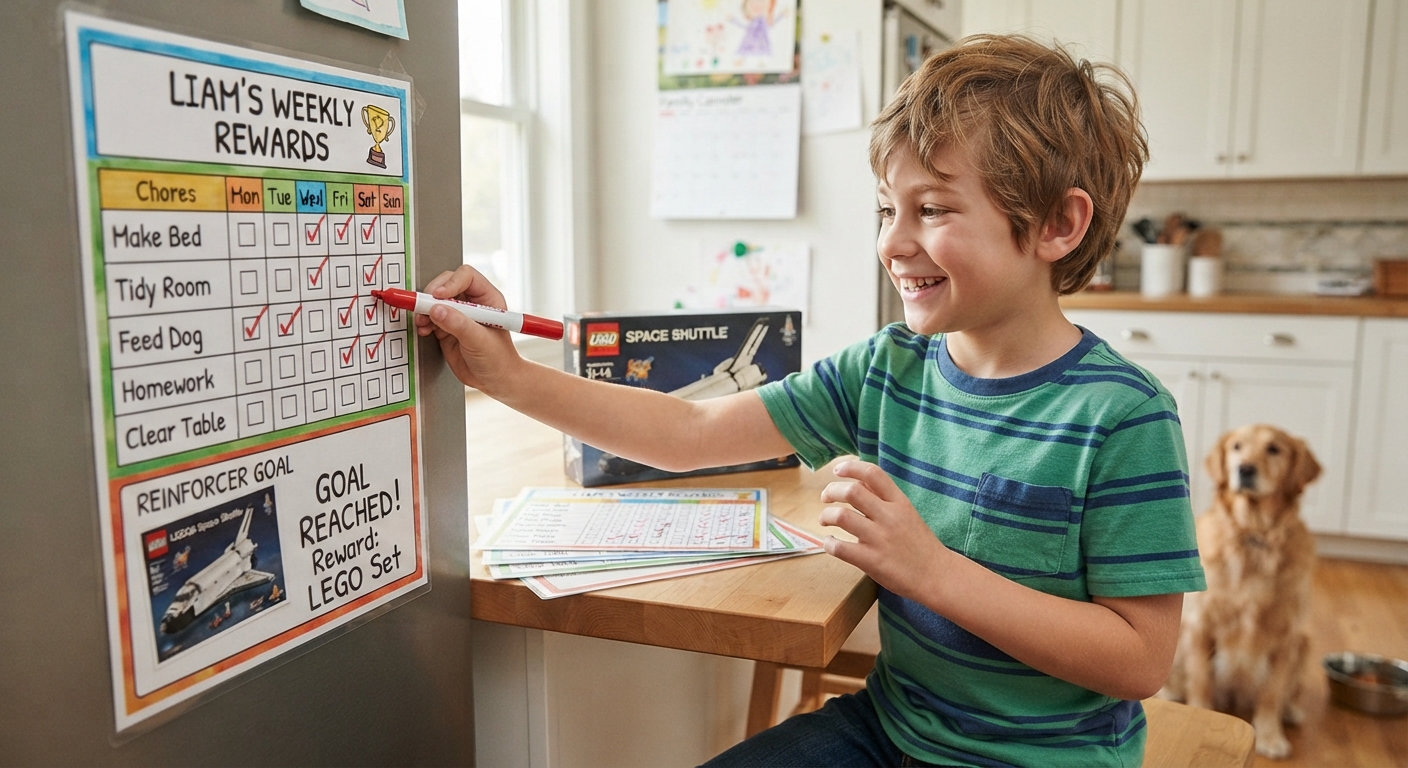
If you’ve had any interactions with behavior analysts or special education teams, you’ve probably heard the phrase “positive reinforcement” plenty of times. Most of us already have a general idea of what it means: praise, rewards, a sticker chart on the fridge, or a treat after a shot at the doctor’s office. But in the world of ABA therapy, positive reinforcement is actually a precise, science-based term, and understanding what it really means can help you use it more effectively with your own child at home.
In behavior analysis, positive reinforcement means something very specific: when a behavior is immediately followed by something being added to the environment, and as a result, that behavior becomes more likely to happen again in the future under similar circumstances, reinforcement has occurred. Notice what’s missing from that definition. There’s no mention of whether the consequence felt nice, whether it was meant kindly, or whether we assume a child “should” like it. Reinforcement is defined entirely by its effect on future behavior, not by our intentions. If you tell your child “great job!” every time they clean up their toys, but their toy-picking-up behavior doesn’t actually increase over time, then that verbal praise and attention technically weren’t reinforcing, no matter how happy they looked in the moment to get your approval. This is one of the most important, and most often misunderstood, pieces of the science: reinforcement isn’t just a reward we give; it’s a relationship we observe between a behavior and what happens next.
Positive reinforcement is often misunderstood, and as a result, not used effectively. Here are some important things to understand about positive reinforcement and how that understanding can help you:
Reinforcers need to be individualized. Sure, there are things that most people love… who would turn down some money? But most of us also have things that mean a lot to us that are very specific to our interests and preferences. My son loves soccer jerseys, and his best friend loves vinyl albums. To use positive reinforcement effectively, you must have a good understanding of your child’s preferences. For many parents, this is easy. What does your child spend tons of time doing? What toy can they not live without? What food will they climb up into the cabinets to sneak a bite of? If your child receives ABA therapy, their behavior analyst also has more formal ways of gathering this information, called preference assessments.
Providing specific planned reinforcers doesn’t turn kids into robots who only care about earning things. Let me share a personal story with you: My son has always been very thin, doesn’t have a big appetite, but also plays a ton of sports at a pretty high level. We attempted every parenting, pediatrician, and nutritionist’s advice to focus on fueling his body and energy to grow and do well in sports. And nearly every meal was a fight. Because the distant “maybe if I eat a lot now, I’ll do better at baseball tomorrow” wasn’t a powerful enough reinforcer to compete with “I’d rather be doing anything but eating right now.” So, I decided to follow my behavior analyst instincts, and I created a chart with rules about money he could earn for meeting daily calorie goals. Now, meals only include a few reminders to focus on what he’s eating so he can earn. And guess what else? He’s gained a few pounds and is achieving his goals in athletics. The little extra push that my added and “unnatural” reinforcement system gave him allowed him to now contact and learn from the natural reinforcement of fueling his body for sports. I won’t have to pay him to eat forever; he’s learning to focus on and think about his calorie intake on his own for his own reinforcers.
Similarly, positive reinforcement isn’t a bribe. Sometimes, parents end up bribing their kids simply because they don’t know how to use reinforcement correctly and effectively. And hey, no judgment here… I’m a mom, and in a pinch, I’ve definitely bribed my son! But let’s consider the difference between bribery and positive reinforcement in the following scenario:
Bribery: It’s time to leave the playground, and your son flops on the ground crying, yelling, and refusing to leave. You’re going to be late, so you finally say, “Look, if you just stop it and leave, I’ll give you a soda in the car.”
Positive reinforcement: At the beginning of the playground visit, you state, “We get to spend 30 minutes at the playground today. When I tell you it’s time to leave, if you stop playing and walk to the car without crying or yelling, you can have some soda on the drive home.”
With a good plan, positive reinforcement is nothing like bribery and is much more effective in promoting positive behavior over time!
Positive reinforcement plays a big part in problem behaviors too. First, if a behavior is occurring, something is acting as a reinforcer. We just don’t do things that don’t work for us. So, when we are trying to figure out why a problem behavior continues to happen, we also consider if people in the child’s environment are reinforcing it. For example, a family is out to dinner when their toddler begins to fuss and swipe items off the table. Embarrassed and wanting to continue to enjoy dinner, mom or dad quickly hand over their phone. The toddler immediately calms down, engrossed in a video. Whew, crisis averted. But what may have happened is that the parents positively reinforced the fussy behavior by providing a highly preferred item. It looks like it worked in the moment but remember our definition above: if that toddler continues to fuss at every dinner out, providing the phone is a reinforcer. Behavior analysts conduct functional behavioral assessments (FBAs) to identify the things that are reinforcing and maintaining problem behavior.
Then, positive reinforcement plays an important role in decreasing problem behavior too! Most behavior plans include providing reinforcement for what is often called an “alternative adaptive behavior.” In other words, teach and reinforce another positive behavior that gets them the same thing the old problem behavior did. The fussy toddler could learn to say “phone please” instead. Or maybe mom and dad can create a “dinner out rule”: “If you sit nicely and quietly for 5 minutes, you can have our phone.”
The encouraging news for parents is that you don’t need a behavior analysis degree to use positive reinforcement well. Ever hear the saying, “If you fail to plan, you plan to fail?” Remember this saying when thinking about how to best use positive reinforcement with your child. Have a plan: What behavior do you want to see increase? What specific and individualized reinforcer will you use? How and when will you follow through on giving it (or not giving it when they don’t earn!)
Reinforcement works best when it’s immediate (delivered right after the behavior, not hours later), specific (paired with clear praise like “great job asking for a break!” rather than a vague “good job”), and genuinely motivating to your child, not just something you assume they should like. If your child has ABA therapy, ask your BCBA what reinforcers they are using and how during sessions. Ask them for help developing a plan on carrying those same strategies into your daily routine at home. This consistency can really help positive behaviors and new skills generalize and stick!