
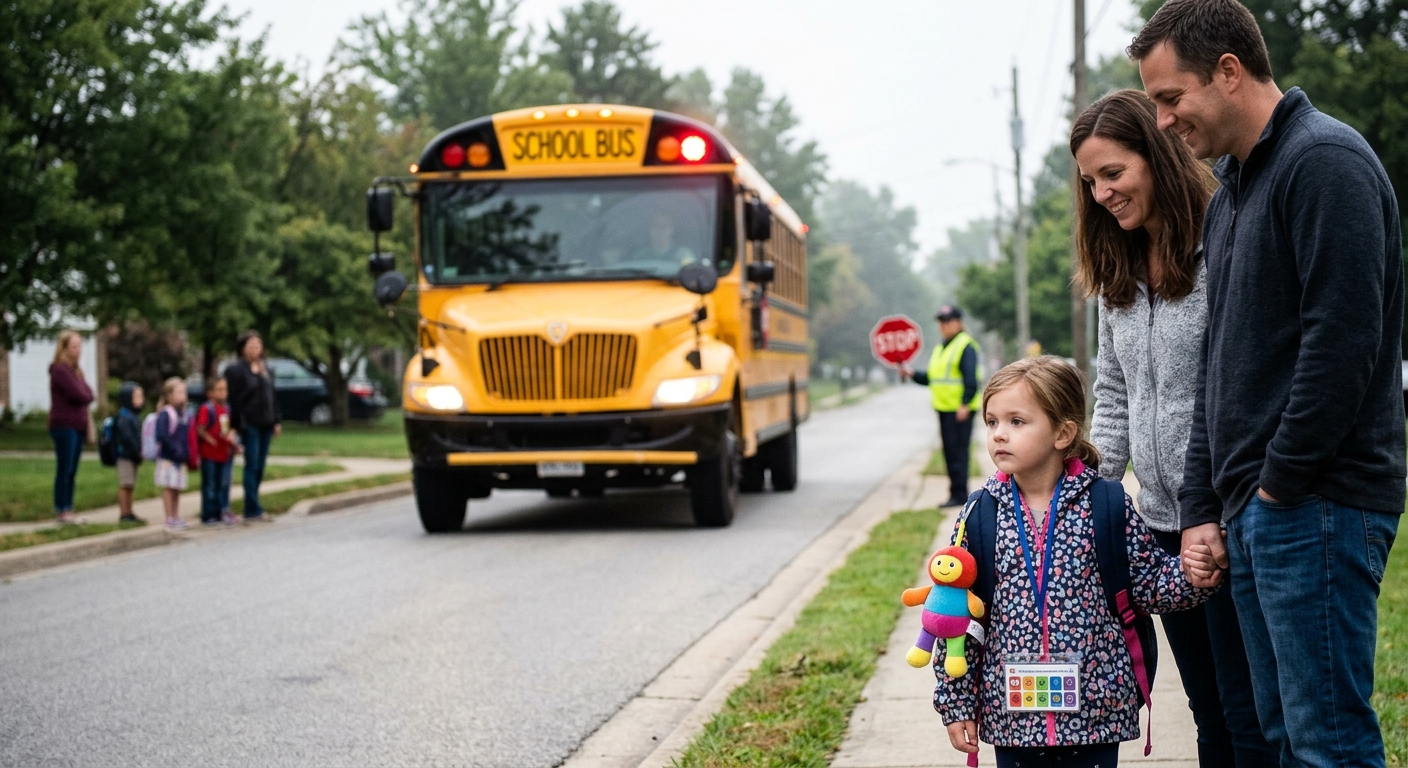
In New Jersey, summer is officially over, and school is back in session. As I took the typical “in front of the door, first day of school” picture of my son yesterday, I thought about all the changes that fall brings us. New routines, a return to forgotten routines, homework and studying stress, and earlier mornings… to name just a few!
For families with autistic children, all these changes come with a few extra layers of challenges. New schedules, new teachers, and new classrooms can feel overwhelming for a child who thrives on predictability. And the return of routines and rules at home can be difficult, too.
One of the most helpful things families can do in the weeks leading up to school is start rebuilding structure early, rather than waiting for the first day to arrive. Slowly shifting bedtime and wake-up times back toward the school schedule, reintroducing a morning routine, and practicing the “flow” of a school day (getting dressed, eating breakfast, gathering a backpack) can make the actual transition feel easier. Visual schedules, social stories, and simple countdowns (“3 more days until school!”) can also go a long way in helping children with autism understand and anticipate what’s coming, especially for kids who experience developmental delays associated with autism or who find unpredictability particularly distressing.
If you’ve missed the opportunity to do this, give yourself some grace and slowly return to routines and expectations now. Perhaps start with just a few bites of breakfast, or go ahead and get your child’s backpack ready for them this week. Slowly increase what you expect your child to complete each morning. After school, prepare them for what’s ahead. This week, my son doesn’t have any homework, but I’ve set time aside for him to read and do Duolingo so he gradually adjusts to the expectation of schoolwork in the afternoons and evenings.
These times of transition, while difficult, can also be great learning opportunities. Examples of this might be teaching your child to ask for help getting dressed in the morning, take a break during homework, or use coping strategies when they’re feeling overwhelmed. Introducing visual supports, such as a morning routine checklist or a timer to show how long until the bus arrives, can also be helpful. And don’t forget about positive reinforcement! It’s easy to forget this when we’re just focused on getting through the day. No one is giving you a reinforcer for packing lunches and washing school uniforms! But the most effective way to see an increase in cooperative, positive behaviors in our kids is to provide positive reinforcement. This can be as simple as a high five and a “great job getting dressed and remembering your backpack!” on their way out the door, or a more structured plan to allow for 15 minutes of TV time each evening if they’ve completed homework without any problem behaviors. This is a great time to loop in your child’s BCBA or therapist about back-to-school goals; many ABA therapy programs can incorporate school readiness skills directly into ongoing sessions, whether that’s practicing following multi-step directions, building tolerance for new environments, or working on social skills challenges like taking turns or joining a group activity.
Remember that seeing an increase in problem behaviors is understandable and likely temporary. A child who seems more anxious, more rigid, or more prone to meltdowns in these first few weeks isn’t failing at the transition; they’re communicating that it’s hard. These behaviors are often your child’s only way of letting you know “I’m tired,” or “I really don’t like eating breakfast this early,” or “I’m exhausted after school and need some alone time.” This is where behavior support strategies really help. Consistent routines, clear expectations, and calm, predictable responses from the adults around them can help a child regulate and adjust more smoothly over time. If you’re working with an ABA provider, don’t hesitate to reach out for extra support or a quick check-in during this stretch; small adjustments early on can prevent bigger struggles later.
Finally, be realistic and give yourself a break. You know your child better than anyone, and every family’s back-to-school journey looks a little different. Some children ease back in within days; others need a few weeks to find their rhythm again, and that’s okay. Lean on your child’s teachers, therapists, and support team. With patience, preparation, and the right support in place, this new school year can be a season of real growth, not just for your child, but for your whole family.